Custom Bathroom Vanity Manufacturers in Pretoria East: Precision Architectural Joinery for Luxury Wet Areas
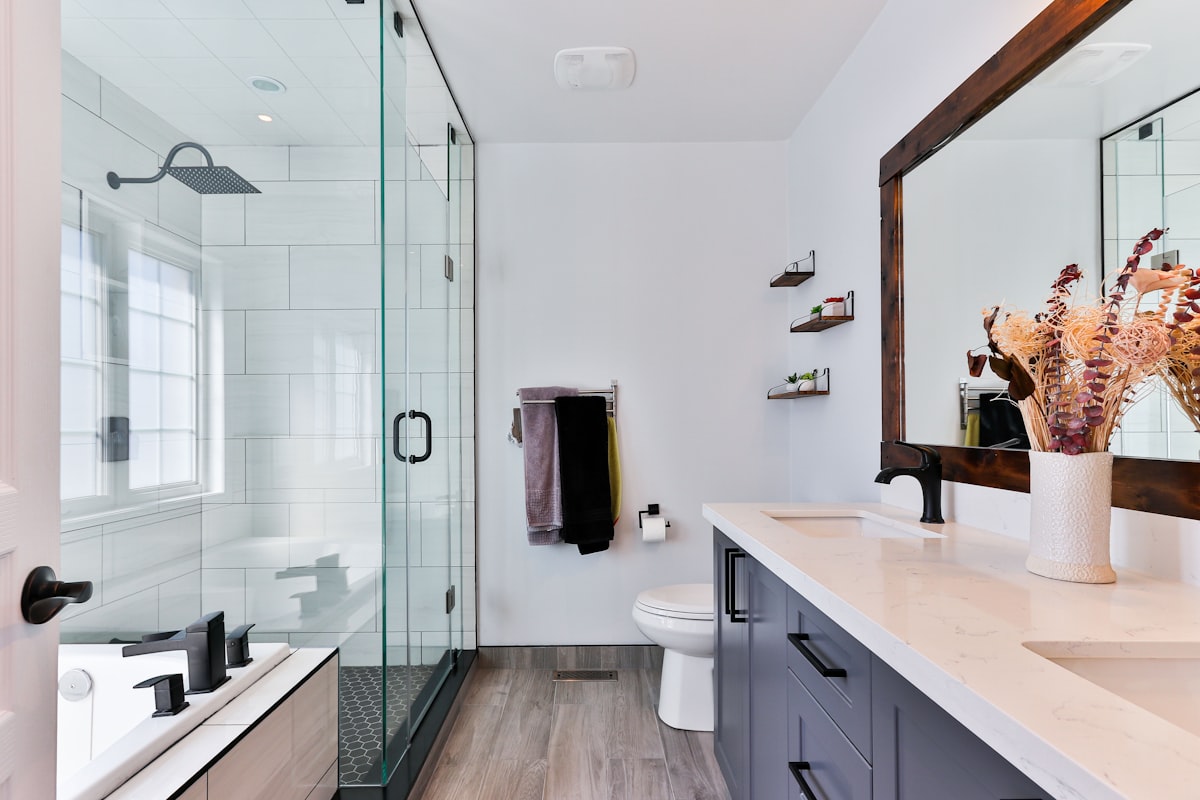
Engineering the Modern Master Ensuite: Bespoke Bathroom Vanity Architecture
In high-end residential architecture, the master ensuite has evolved from a purely functional utility into a private wellness sanctuary. Across luxury residential enclaves such as Mooikloof Equestrian Estate, Silver Lakes Golf Estate, Waterkloof Ridge, and The Hills, interior designers and architects demand cabinetry that matches the sophistication of full-slab bookmatched porcelain and architectural tapware. Yet, bathroom environments present the harshest operating conditions for bespoke joinery: cyclical steam loading, ambient humidity fluctuations between 30% and 90%, direct water exposure, and static deadloads imposed by natural marble and engineered stone tops.
As specialized custom bathroom vanity manufacturers in Pretoria East, Revival Space bridges the gap between conceptual architectural renders and durable structural execution. Producing luxury vanities requires more than aesthetic execution; it demands an uncompromising material science protocol, rigorous structural engineering, and precision hardware integration. Standard flat-pack units and commercial-grade particleboards consistently degrade in high-humidity wet areas, resulting in core swelling, delamination, and drawer runner failure. Revival Space engineers bespoke architectural vanities built to endure the lifetime of the home.
Substrate Integrity: Marine-Grade Core Engineering and PUR Bonding
The foundational failure point of conventional vanities is moisture ingress through unsealed core materials. Standard interior particleboard (chipboard) rapidly absorbs atmospheric moisture, expanding irreversibly within 18 to 24 months. Revival Space eliminates this failure mode through the strict specification of moisture-resistant (MR) substrates and engineered barrier systems.
High-Performance Core Materials
- Moisture-Resistant SupaWood (MDF): Formulated with moisture-repellent melamine-urea-formaldehyde (MUF) resin matrixes, our MR-grade medium-density fibreboard exhibits negligible thickness swelling when subjected to localized humidity spikes in luxury wet rooms.
- Hydrophobic Marine-Grade Birch Plywood: For floating vanities supporting dense natural stone, we engineer multi-ply Baltic and European Birch substrates bonded with phenolic exterior-grade resins (Class 3 exterior exposure rating). This provides exceptional shear strength and dimensional stability under continuous cantilever load.
- Solid Hardwood Selection: When architectural briefs call for natural timber slats, reeded profiles, or structural timber frames, we specify kiln-dried American Walnut, quarter-sawn American White Oak, or dense tropical hardwoods like Balau and Garapa, cured to an equilibrium moisture content (EMC) of 8% to 10% to prevent post-installation cupping or checking.
Polyurethane (PUR) Edge-Banding Technology
Decorative faces—such as PG Bison MelaWood, matte-engineered SupaMatt, or Seno high-gloss/super-matte acrylics—are only as robust as their perimeter seal. Revival Space utilizes industrial Polyurethane (PUR) hot-melt adhesive application rather than standard EVA (ethylene-vinyl acetate) glues. PUR cross-links chemically upon curing, forming a waterproof, heat-resistant barrier capable of withstanding ambient temperatures up to 140°C and constant moisture exposure. The resulting zero-joint aesthetic provides a virtually invisible, impermeable bond line that permanently locks out steam.
Cantilever Engineering: Floating vs. Floor-Standing Architecture
The floating vanity remains the signature aesthetic of modern Gauteng estates. However, floating architecture introduces significant mechanical leverage: a 2400mm double-basin vanity featuring 20mm Caesarstone, Neolith sintered stone, or polished Calacatta marble—combined with undermount porcelain sinks and brassware—can present a static deadload exceeding 160 kilograms, amplified whenever a user leans against the front edge.
Structural Cantilever Sub-Frames
Relying on standard vanity wall hangars or simple expansion plugs into hollow clay bricks often leads to wall failure and substrate deflection. Revival Space collaborates directly with structural engineers and site contractors to resolve these forces prior to first-fix plumbing:
- Engineered Steel Chassis: For long spans and deep projections, we fabricate custom internal mild steel sub-frames powder-coated against corrosion. These chassis are chemically anchored using high-tensile threaded rods embedded in concrete ring beams or solid structural brickwork.
- Häfele Heavy-Duty Concealed Brackets: For intermediate spans, we utilize concealed, three-way adjustable heavy-duty wall brackets rated up to 250kg per pair, distributing mechanical shear forces evenly across the wall plane.
- Deflection Tolerances: Structural sub-assemblies are verified against an L/500 deflection limit, ensuring zero movement that could fracture delicate stone silicone seals or lead to perimeter tile cracking.
For classical or transitional residences—such as heritage properties in Waterkloof or French Provencal estates in Midstream—Revival Space manufactures bespoke floor-standing vanities. These pieces feature recessed plinths, architectural shadow-lines, or tapered solid-timber turned legs, providing generous internal carcass volume while concealing floor-level plumbing services.
Hardware and Movement: Blum Dynamics and Custom Waste Cutouts
A luxury vanity must operate silently. Mechanical friction, drawer sag, and slamming reduce the perceived value of a bespoke space. We standardize drawer systems on genuine Blum motion technologies, tailored to withstand demanding bathroom weights.
Blum Legrabox and Movento Runner Systems
We specify Blum Legrabox pure metal drawer sides and concealed Blum Movento undermount runners featuring integrated dynamic load ratings of 40kg to 70kg. These systems incorporate adaptive BLUMOTION soft-close dampening and TIP-ON mechanical touch-to-open integration for seamless handleless cabinetry. In environments prone to airborne moisture, the corrosion-resistant finishes of Blum hardware prevent the oxidation common in inferior runner systems.
Custom CNC U-Shaped Plumbing Cutouts
Standard joiners often cut jagged, unsealed holes on-site around basin waste traps, weakening drawer boxes and leaving exposed core materials. At Revival Space, all plumbing integration is pre-engineered during architectural design. We utilize multi-axis CNC routing to fabricate elegant, factory-sealed U-shaped cutouts inside drawer boxes. Internal carcass dividers wrap seamlessly around bottle traps and waste pipes, preserving maximum internal storage volume while fully protecting drawer components with PUR-sealed edging.
Comparison: Commercial-Grade Vanities vs. Revival Space Architectural Standard
| Engineering Parameter | Standard Commercial Vanities | Revival Space Architectural Joinery |
|---|---|---|
| Carcass Substrate | 16mm Standard Interior Particleboard | 18mm Moisture-Resistant SupaWood / Phenolic Birch Ply |
| Edge-Banding Chemistry | Standard EVA Hot-Melt (Heat/Moisture Vulnerable) | Reactive Polyurethane (PUR) Waterproof Cross-Linked Seal |
| Floating Support System | Direct raw-plug screws through 16mm back rail | Engineered steel chassis / Häfele heavy-duty concealed brackets |
| Drawer Running Gear | Generic ball-bearing slides (15-25kg rating) | Blum Legrabox / Movento Soft-Close (40-70kg dynamic load) |
| Stone Integration | Unreinforced top rails resting directly on panels | CNC stress-relieved solid under-counter structural torsion boxes |
Architectural Collaboration and Specifier Services in Gauteng
Revival Space works alongside leading architectural practices, interior design consultancies, and luxury residential property developers. Review our dedicated workflow for trade and architectural blueprint execution, where our technical drafting studio converts concept layouts into parametric shop drawings, comprehensive cutting lists, and structural fixing schedules.
From initial on-site laser scanning to CNC manufacturing in our Pretoria East workshop, we maintain dimensional tolerances within ±0.5mm. We service high-end residential estates across our expansive Pretoria and Gauteng regional service areas, coordinating deliveries and structural installations to meet demanding main-contractor timelines in Sandton, Waterfall City, Steyn City, Mooikloof, and Silver Lakes.
"True joinery luxury is found where engineering rigor meets master craft. When a floating vanity supports 200 kilograms of natural quartzite while drawers glide effortlessly on concealed runners without a millimeter of sag, the joinery transcends aesthetic value—it becomes an enduring element of architectural infrastructure."
Frequently Asked Questions
How do you prevent floating bathroom vanities from sagging under heavy stone tops?
We eliminate vanity deflection by engineering internal structural support systems before installation. Depending on the span and countertop mass, we anchor laser-cut steel cantilever arms directly to the load-bearing masonry using chemical epoxy anchors, or install industrial-rated Häfele concealed brackets. Our carcasses feature 18mm solid structural backs and integrated torsion boxes rather than standard thin back panels, ensuring zero mechanical flex across multi-meter spans.
What is the difference between EVA and PUR edge-banding in wet areas?
EVA (ethylene-vinyl acetate) adhesives melt under heat and can soften when exposed to steam, allowing moisture into the core substrate and causing swelling. PUR (polyurethane) adhesive undergoes an irreversible chemical reaction upon exposure to ambient air moisture, forming a heat-, water-, and chemical-resistant bond. PUR creates a hermetic seal that prevents water ingress from dripping tapware or rising shower humidity.
Can Revival Space integrate natural stone and undermount basins directly into the vanity design?
Yes. Our technical team works from technical basin cut-out templates and coordinates directly with leading stone fabricators (specializing in Caesarstone, Neolith, Dekton, and natural granite/marble). We cut structural support rails, waste penetrations, and undermount brackets in-house, ensuring that the stone, basin, and cabinetry assemble with micro-millimeter precision on site.
What are your typical manufacturing lead times for custom bathroom vanities in Pretoria East?
Our standard manufacturing lead time ranges from 4 to 6 weeks following sign-off of architectural shop drawings, 3D renders, and final site measurements. For projects with complex finishes—such as hand-applied 2K polyurethane finishes, custom fluted hardwood detailing, or structural steelwork—lead times may extend to 6 to 8 weeks to allow for thorough bench-testing and finishing cure times.
Ready to specify bespoke vanities for your upcoming architectural build or master suite renovation? Request an architectural consultation with the joinery directors at Revival Space today.
Related Revival Space Speciality
Custom Architectural Joinery & Interior Fit-Outs
View our bespoke TV media walls, acoustic slatted panelling, executive studies, bathroom vanities, and entertainment bars.